
Signals Matter.
Hero video
Trusted by:


 The Vision Behind NEXA
One brand. A growing family of predictive medical wearables.
NEXA Wearables isn't built around a single device. We're building a platform, technology that continuously listens to the body's signals and learns to recognize the patterns that come before a critical health event, so people get meaningful warning instead of an after-the-fact diagnosis. NEXA EEG Glasses is where that platform starts, not where it ends.

Understand
Continuous signal capture built for daily life, worn at home, at work, or at school, not just in a clinic.

Predict
AI models trained to recognize the patterns that tend to appear before a critical event, not only report it afterward.

Protect
Real-time alerts that keep patients and the people who care for them connected exactly when it matters.

 The Core Challenge
Why proactive care matters
Healthcare is still largely reactive rather than proactive. The body often gives signals before a critical event, but without continuous insight, those signals are understood too late.
Care often responds after a critical event, rather than identifying risk earlier.
Patients and families live with uncertainty, never knowing when health can change without warning.
A single unpredictable event can affect safety, independence, work, study, and everyday life.

The opportunity: a continuous, everyday wearable that turns early signals into time to act.
This is the problem NEXA Wearables was founded to solve.
 Our First Application
NEXA EEG Glasses
A predictive wearable for people living with epilepsy, designed to notice the signs of a seizure before it happens, and give patients and caregivers time to act.
 Granted IP
- Pilot clinical trials underway
- Developed in Oman
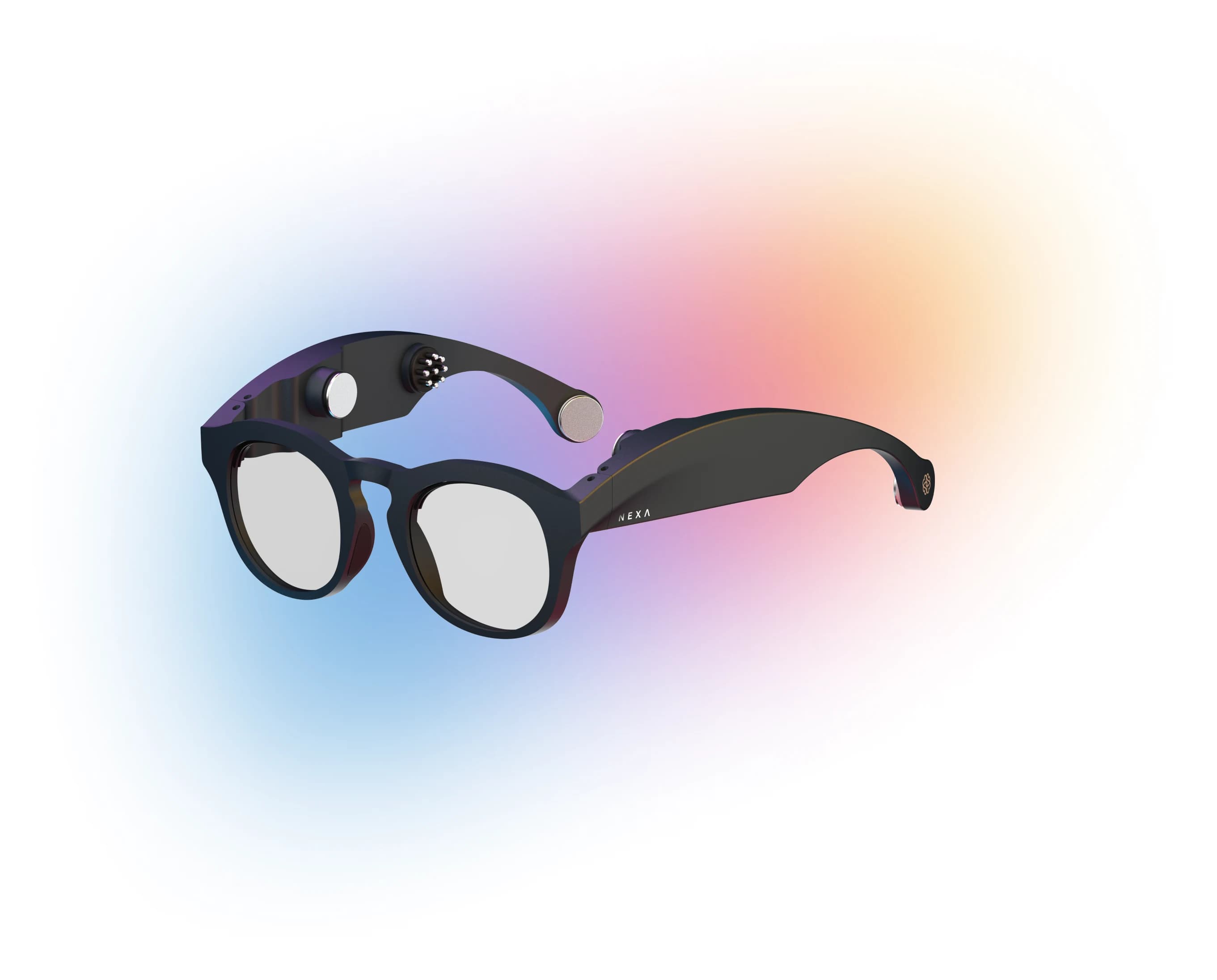
- Designed for daily life, not a hospital visit or a lab session.
- Built to flag rising seizure risk ahead of time, instead of only logging what already happened.
- Real-time alerts reach the people who can respond, right when they’re needed.
- Protected innovation developed with Sultan Qaboos University and Oman’s Ministry of Health.
- NEXA EEG Glasses are still under development. Design, features, and performance will continue to evolve through clinical validation - this page reflects our current direction, not a final product.
How It Helps
From a quiet signal to time to act
The value of NEXA EEG Glasses isn’t the hardware, it’s the extra time it can give someone before a seizure happens.

Capture
Sensors continuously read brain activity throughout the day, without disrupting it.

Understand
AI models look for the patterns that tend to appear before a seizure.

Warn
A real-time alert reaches the patient and their caregiver.

Act
Early warning means time to get to safety, or simply to prepare.
 Clinical Validation Underway
Early results, real patients
NEXA EEG Glasses are currently in a pilot clinical trial across multiple national sites, early evidence that the approach works, with much more validation ahead.
3
Clinical sites nationally
29
Participants enrolled to date
5
Seizures captured in pilot use
98.4%
Model accuracy on unseen patient data
58 min
Average early warning before seizure onset
 Global Interest, Real Need
Demand before launch

These glasses could be a game changer for people with epilepsy.
Patient, Oman 
These glasses could significantly improve his way of life.
Caregiver, USA 
We are interested for our daughter; medication is not effective.
Caregiver, Colombia 
Is it available in the U.S. or in clinical trials?
Researcher, Akron Children’s Hospital - USA
 Addressable Market
A large, underserved patient population
Epilepsy affects tens of millions of people worldwide, and roughly a third don't respond well to medication alone, leaving a wide gap that early warning could help close.
Global Epilepsy Population
70 Million

People living with epilepsy worldwide,
the Total Addressable Market.
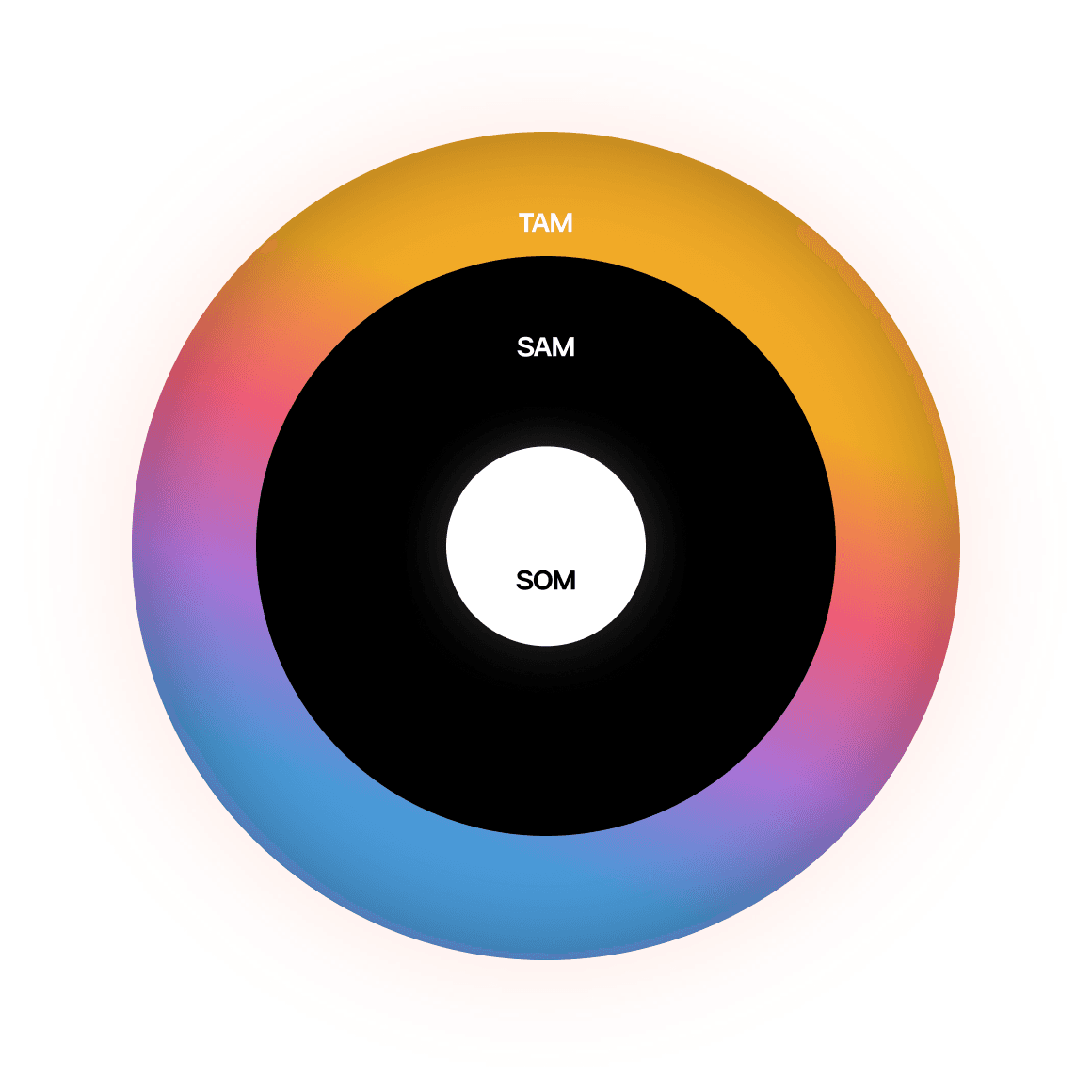
Targetable Patient Segment
20 Million
Patients within the initial addressable segment ~30% of TAM.
Initial Opportunity
40 Thousand
Target users within the GCC
~5–10% of the addressable GCC segment.
 Roadmap
Path to clinical validation and scale
Pilot Clinical Trials
Complete initial clinical validation with 50 participants
Pivotal Clinical Trials
Strengthen clinical evidence through a larger study
Regulatory Readiness
Advance ISO 13485, CE and other regulatory requirements
Real-World Deployment
Deploy 2,000+ units in controlled real-world use
Scale
Expand adoption, markets, and the NEXA platform
 The Team
Who's building NEXA Wearables

Eng. Maadh Al Hinaai
Chief Executive Officer
- Qualifications:
- MSc Electronics engineering (University of Portsmouth). BEng Mechatronics engineering (SQU). National leadership program “ETIMAD” – Royal Academy of Management
- Experience:
- Lecturer in Aeronautical department (Avionics) – Military technological college.
- Main role:
- Financials, funding, stakeholder & shareholder management, commercials and business continuity

Eng. Yazin Al Musafir
Chief Operating Officer
- Qualifications:
- PhD, Electrical & Computer Engineering, SQU. MBA, Warwick Business School. MSc, Computer Engineering, SQU. BEng, Mechatronics Engineering, SQU. National CEO Program, Royal Academy of Management
- Experience:
- Control & Automation Supervisor, PDO. Visiting Assistant in Research, Yale University.
- Main role:
- Managing NEXA (Neuromorphic AI Wearables). Managing ASB (Brain-Inspired Semiconductor Platform)

Eng. Ahmed Juma
Chief Technology Officer
- Qualifications:
- BEng Mechatronics engineering (SQU). Startup leadership program - Royal Academy of Management.
- Experience:
- Security Specialist - Government of Oman.
- Main role:
- Onsor Lab, AI PC development, AIoT development
Accelerating the Next Milestone
What funding helps us move faster on
Clinical Validation
Expand patient testing and strengthen clinical evidence.
Regulatory Readiness
Advance quality, certification, and regulatory requirements.
Pilot Deployment
Move NEXA EEG Glasses closer to real-world use.
Get in touch
NEXA, shaping a more reassuring tomorrow.
Partner with us, contribute to clinical research, or connect with our team to discover what’s next in predictive health.